
Roundtable: What Alberta's Opening Means for Canadian iGaming
Alberta's market opening has been one of the biggest iGaming developments of 2026. Following the success of Ontario's regulated market since its launch in 2022, anticipation has been building around Alberta and what its arrival could mean for the next phase of iGaming growth in Canada.
While there are clear parallels between Ontario and Alberta, there are also important differences in how the two markets are taking shape. The next 12 months will provide valuable insight into Alberta's commercial potential, the opportunities available to suppliers and operators, and whether its opening could pave the way for further regulated markets across Canada.
To explore what comes next, CasinoCanada.com brought together three industry insiders with extensive experience across the North American and international iGaming sectors: Robert Kowalski, Account Manager, North America at Kiron; Chris Reid, Commercial Director at 1X2 Network; and Adam Pentecost, Chief Revenue Officer at Gaming Corps.
In this roundtable, they share their early impressions of Alberta, assess the immediate opportunities and challenges facing the market, and discuss what its development could mean for the wider future of regulated iGaming in Canada.
What have been your initial impressions of Alberta as a market, and what are you expecting to be some of the biggest stumbling blocks as the market matures?
Robert Kowalski: Alberta is really interesting because it gives us the first opportunity to see how a competitive iGaming model develops in Canada outside Ontario.
There was already a significant online gaming audience in Alberta before regulation. The province estimated that around 70% of online gambling activity was taking place with unregulated operators, so this is not a market where players are suddenly discovering online gaming for the first time.
The bigger job now is moving more of that activity into the regulated environment and giving players good reasons to stay there.
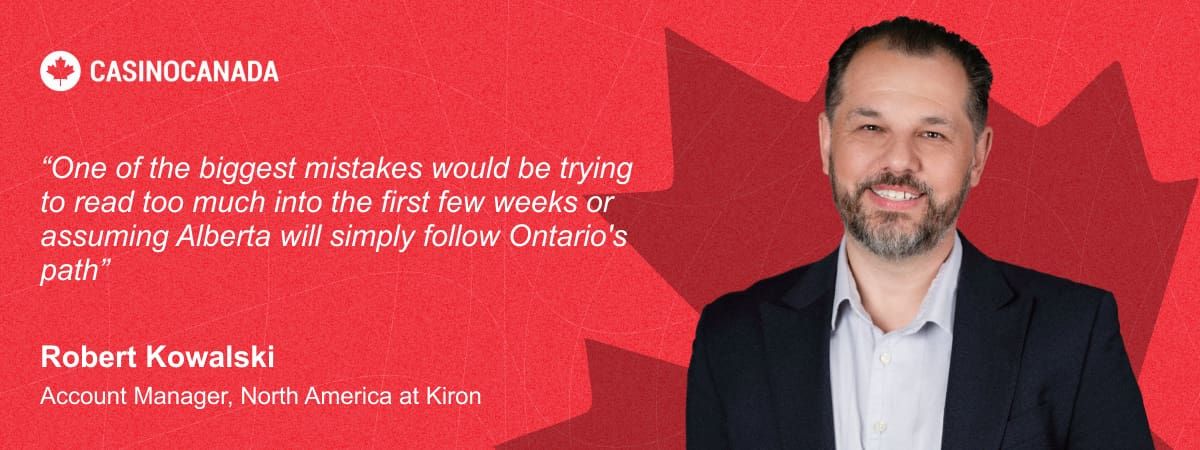
It is still very early, so I think one of the biggest mistakes would be trying to read too much into the first few weeks or assuming Alberta will simply follow Ontario's path. There are obviously lessons from Ontario, but Alberta needs to develop as its own market.
For operators and suppliers, there is also the normal work that comes with entering any newly regulated jurisdiction. You have registration, technical standards, player protection requirements and the wider compliance framework to work through. Alberta has put quite a detailed structure around that from the outset.
Once that initial phase settles, the more interesting question will be what players actually respond to. That is when we will start learning much more about content preferences, product mix and how operators choose to differentiate themselves.
Chris Reid: Our initial impressions of Alberta have been very positive. From a supplier perspective, we found the registration and go-live process straightforward, and both the regulator and wider market stakeholders were approachable and supportive in helping us understand and meet the requirements.
It is still very early in the market's development, but we are already seeing some interesting differences between Alberta and Ontario. Player preferences are not identical, with certain types of content performing differently between the two provinces, and we are also seeing some variation in the early performance of individual operators.
From 1X2 Network's perspective, our start in Alberta has been considerably stronger than our initial launch into Ontario, which is encouraging. That said, Ontario itself is an excellent example of the potential of Canadian markets. It started out as a relatively small market for us, but over the four years since it launched, it has become one of our top five markets. This, in itself, is a fantastic reference point for how much room Alberta has to grow.
One challenge we are anticipating is the level of competition. Alberta has attracted a significant number of operators and suppliers from day one, particularly relative to its population size. Competition is ultimately healthy for the market and for consumers, but it will put greater pressure on operators and suppliers to differentiate themselves through product, customer experience and localisation. The challenge will be ensuring the market remains commercially sustainable alongside that level of choice.
Adam Pentecost: Our initial impression is that Alberta represents a real opportunity, which is exactly why we were determined to be ready from launch. Being there from day one gives us the chance to grow alongside our operator partners and the market itself, rather than entering once it is already established.
We expect the major operator names, particularly those with experience in regulated Canadian iGaming, to establish themselves quickly. But the early stages also create an important window for Tier 2 and Tier 3 operators to compete for market share before the landscape becomes more settled.
Ontario provides an encouraging reference point and, at this stage, we do not see any fundamental barrier to Alberta following a similar path. There is a lot to be excited about as the market takes shape.
What does a successful Alberta market look like in 12 to 24 months' time?
Robert Kowalski: For me, the biggest measure of success will be whether Alberta can move a meaningful amount of existing online play into the regulated market.
Operator numbers matter, but having lots of brands is only one part of it. You also want a competitive market where players have genuine choice and where operators are investing in the quality of the overall experience.
I think over the next 12 to 24 months the conversation will naturally move away from who has launched and towards what operators are doing differently.
Content will become a much bigger part of that.
Players today are used to digital entertainment that is immediate, simple to access and available whenever they want it. That behaviour does not stop when they open a betting or gaming platform.
Virtual sports fit quite naturally into that environment because they complement live sport rather than depending on it. They give operators another sports-based experience that can be available throughout the day and can work across both sportsbook and broader gaming audiences.
If, in 12 or 24 months, Alberta has strong movement towards regulated operators, a healthy competitive landscape and operators starting to differentiate through content and player experience, I would see that as a successful market.
Chris Reid: For me, the most important measure of success will be channelisation: moving players who were previously playing with unregulated operators into the regulated market.
A successful Alberta market in 12–24 months would have strong channelisation, a competitive and diverse operator landscape, robust player protections and a regulatory framework that allows responsible operators and suppliers to innovate and grow. Ontario has largely succeeded by these standards, and it has set a benchmark for all Canadian provinces that follow.
If Alberta can achieve that balance, the benefits extend beyond the industry itself. Players benefit from greater protection and choice, operators have access to a sustainable regulated marketplace, and the province benefits from economic activity and gaming revenues that were previously going to the unregulated market.
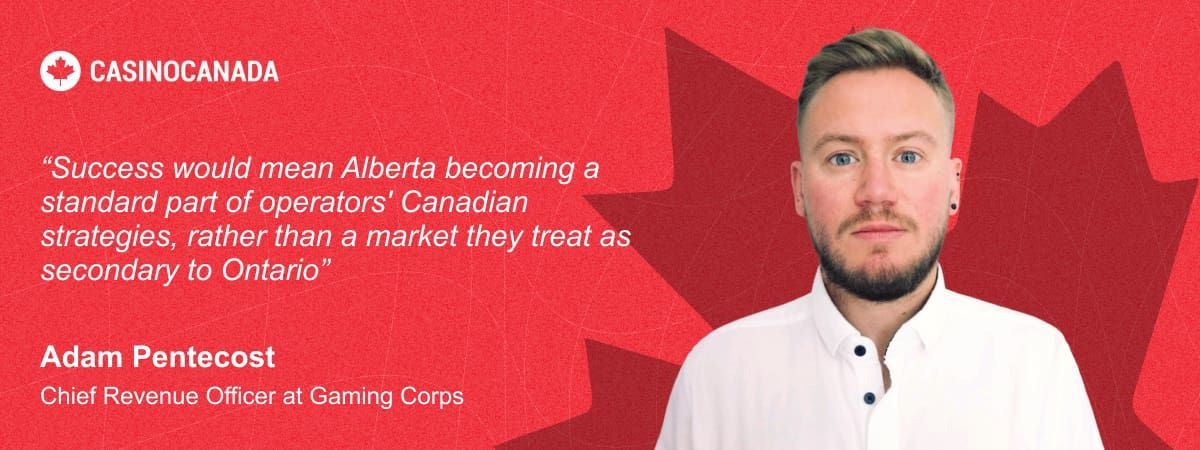
Adam Pentecost: Success would mean Alberta becoming a standard part of operators' Canadian strategies, rather than a market they treat as secondary to Ontario.
The early indicators are encouraging, with month-on-month growth across turnover, GGR, active players, average bet and bets per player. Alberta also has the potential to become a high-value market given the economic profile of the province, so we will be watching closely as player behaviour develops.
We are already seeing positive engagement across our own portfolio. Hold & Win mechanics and the 3 Pigs franchise are translating well, while some of our more distinctive Arcade variants have attracted early VIP interest. That mix of familiar favourites and appetite for something different gives us real confidence as we look ahead to the next 12 to 24 months.
What does Alberta's launch mean for the wider Canadian iGaming landscape?
Robert Kowalski: I think this is where Alberta becomes particularly important.
For more than four years, Ontario has been the main reference point whenever the industry talks about regulated competitive iGaming in Canada. Alberta now gives us a second market to learn from.
That means we can start looking at what carries across provinces and what does not.
Ontario has already shown that there is significant demand for regulated online gaming in Canada. Alberta can now help us understand whether some of the same operator strategies, content choices and player behaviours translate into a different provincial market.
From a supplier perspective, that is valuable because Canada is not one homogeneous market. You can have technology and content that scale nationally, but how you position that content and how players engage with it can still vary by province.
Alberta also gives other provinces another real-world example to look at if they are considering changes to their own iGaming models.
That does not mean every province will follow Ontario or Alberta, and I would be cautious about predicting that. Gaming regulation in Canada remains provincial.
But having two competitive regulated markets gives the industry a much better picture than having one.
Ontario showed that the model could operate at scale. Alberta now gives us the chance to see how well it can travel.
Chris Reid: Ontario demonstrated that an open, competitive, regulated iGaming model can work successfully in Canada, and it has grown into one of the most successful regulated markets in North America. Alberta is the industry's second real data point, and will be a measure of whether this model is repeatable across Canada, or is just a one-off.
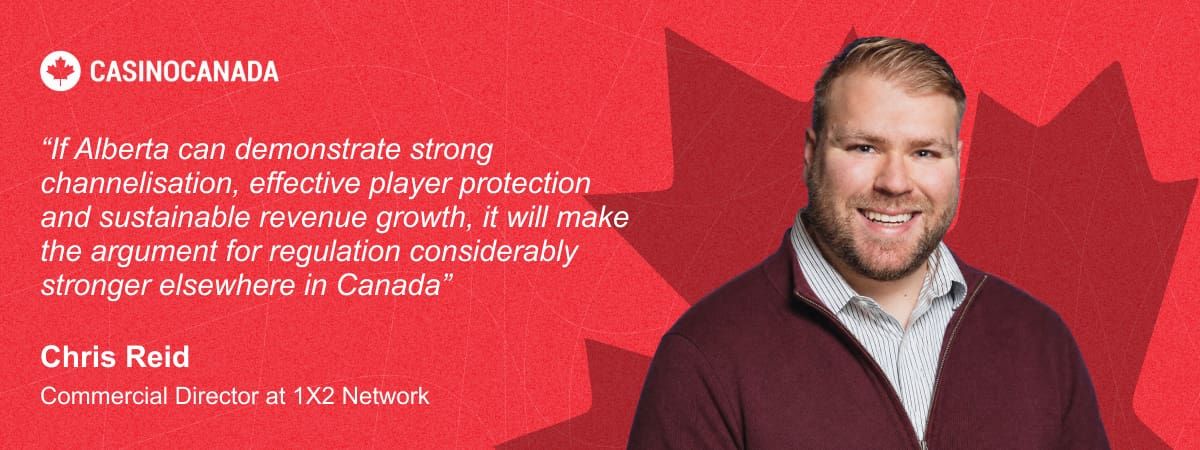
If, over the next couple of years, Alberta can demonstrate strong channelisation, effective player protection and sustainable revenue growth while maintaining a healthy competitive marketplace, it will make the argument for regulation considerably stronger elsewhere in Canada.
There is clearly demand for online gaming across the country. The question for other provinces will increasingly be whether that activity is best left outside a locally regulated framework or brought into a market that can provide greater consumer protection, oversight and economic benefit. Ontario has answered the question and provided a model, and now it's time to find out whether that holds any weight in Alberta.
Adam Pentecost: Alberta is another important step towards a more broadly regulated Canadian iGaming landscape. Ontario proved that an open, regulated model can attract major operator investment and significant player activity, and Alberta now has the chance to show that the same approach can work in another province.
If the market continues on a positive trajectory, it could give other provinces greater confidence to consider similar frameworks. Over time, I would expect more Canadian gaming activity to move into provincially regulated environments as players gain access to more locally regulated alternatives to offshore sites.
For suppliers, that changes the scale of the opportunity considerably. Rather than viewing Canada largely through the lens of one major open market, we could be looking at a much broader regulated ecosystem, creating a significant opportunity for Gaming Corps.